Showing posts with label Black And White. Show all posts

Tuesday, August 22, 2017

The Toronto Film Shooters Large Format Meetup


This weekend is the Toronto Film Shooters large format meetup.  I'm really looking forward to getting my big camera out into Toronto again.  I've been to High Park a few times with that beast, but this time we go en masse! It's going to be a great  outing!

I know, large format is slow, cumbersome, heavy and quite daunting at times, but it's going to be fun. I'm planning on practicing some shallow DOF shots, maybe a portrait or two, never know...

Stay tuned... but for now, enjoy some of the Large Format images I've shot previously....

.... and keep those shutters firing!


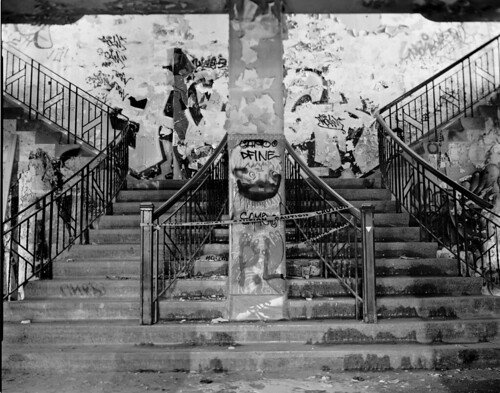
Rundown
Calumet CC400 - Ektar 127mm - EFKE 820C
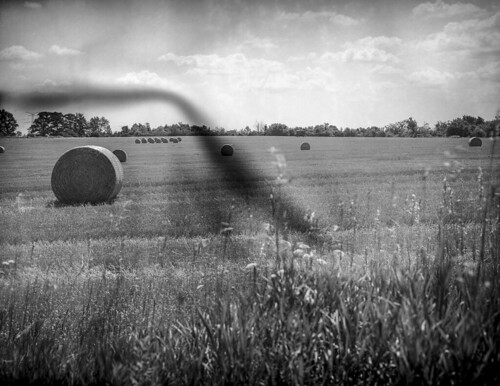
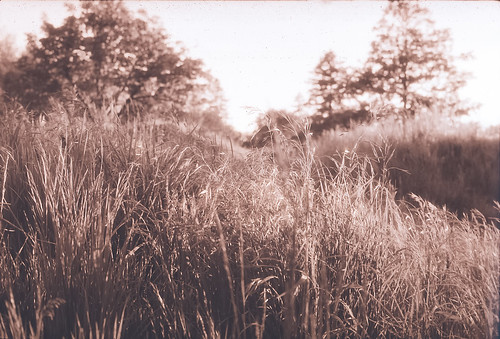
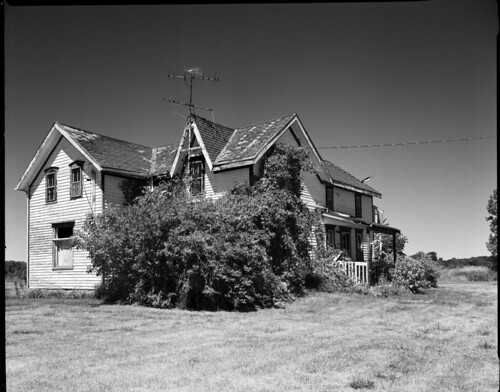
Farmland
Calumet CC400 - Schneider 180mm - Kodak TriX (1971 Expired)
Returned To Kodak
Calumet CC400 - Ektar 127mm - Ilford FP4+
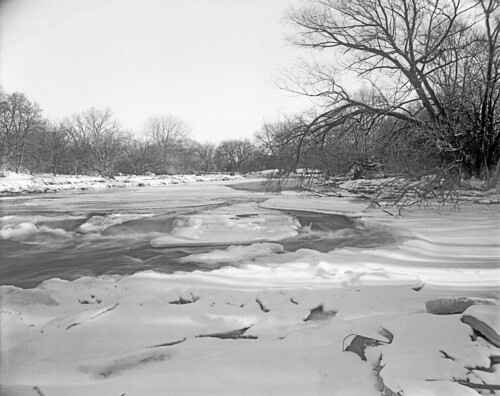
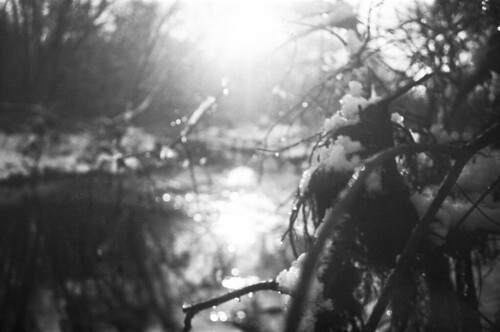
Frozen Humber
Calumet CC400 - Agfa Anastigmat 105mm - FP4+
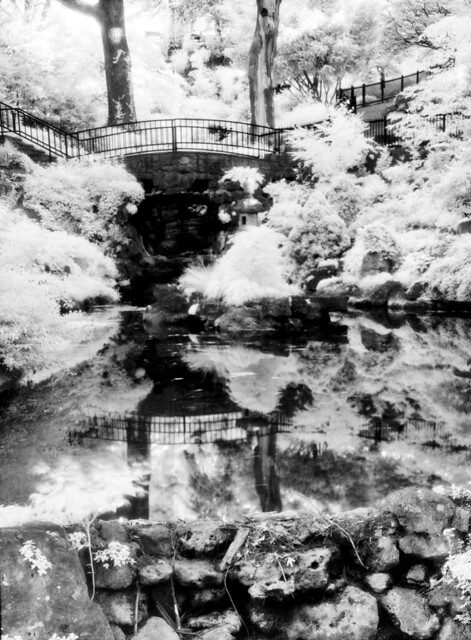
IR Garden
Calumet CC400 - Schneider 210mm - EFKE 820C

Friday, August 11, 2017

TFSM Informal August Long Weekend Meetup


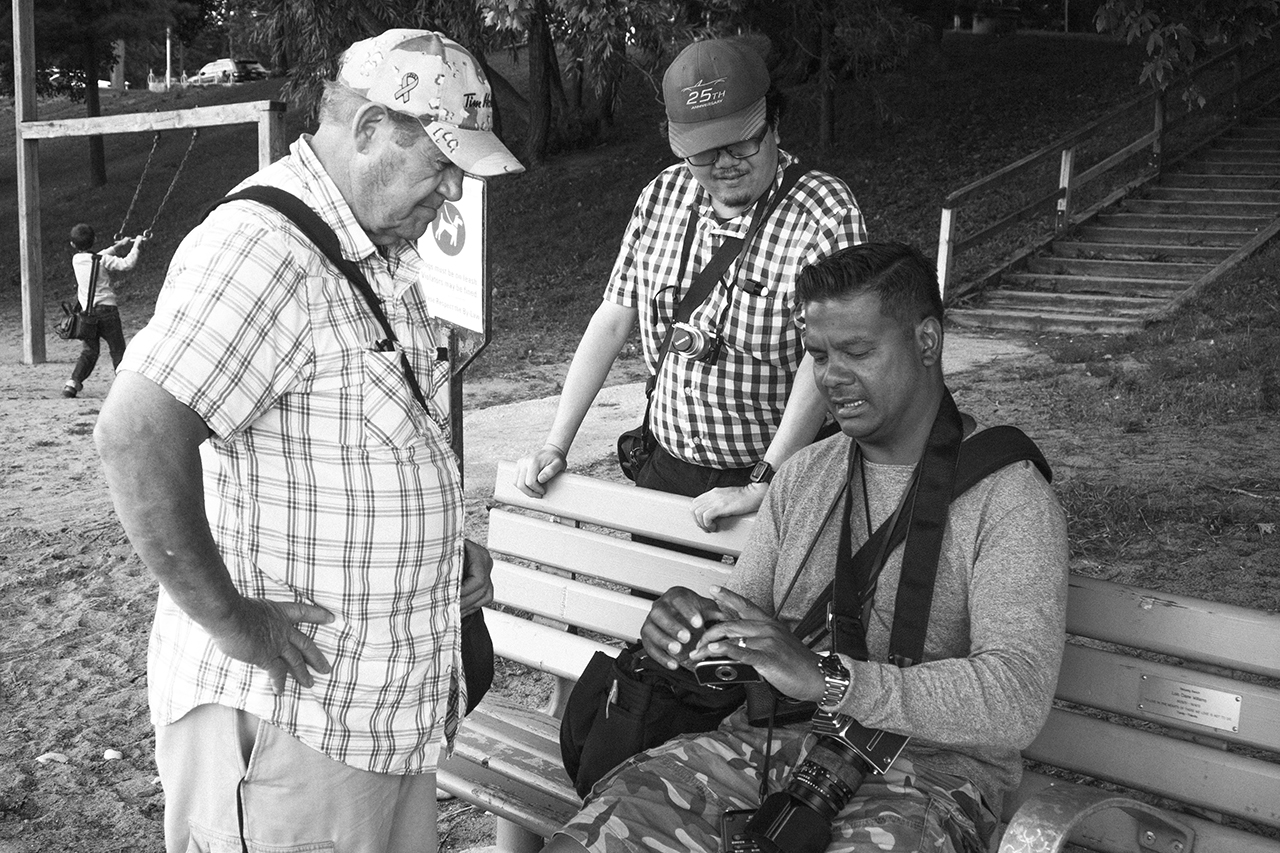
On the 5th, the Toronto Filmshooters Group, as suggested and Organized by +Bill Smith, got together for a walk in the Beaches.  Starting at "THE REMARKABLE BEAN" and finishing at a little craft brewery on Eastern Avenue called Rorschach Brewing Co.

Along the way made for some interesting shooting, but I didn't just have a 35mm SLR around my neck.. Nope, I had a dSLR to capture some quick shots around and to get some shots of the gang out there shooting ...


Of course, what TFSM photo walk is complete without some film shots, considering it is a TFSM meetup!


All film images were taken on the Argus A2 Pre-War model on Rollei Superpan 200 and developed in TMAX Developer.

Until next time everyone, keep those shutters firing!

Friday, August 4, 2017

Mamiya M645 1000s First Look


I took my wife's Mamiya 645 1000s out for a first look. I haven't used a Mamiya before this and I tell you one thing, I am very happy I got the chance to take it out. Wish I hadn't shot the second half roll of +Donna Bitaxi, but I am sure she'll understand.
The low down is that this is a very light modular camera with a lot of options and a lot of promise.  A camera I would highly recommend you give a second look at, but be forewarned, there is only one film back, which is non-removeable. So if you want to be able to change film-backs mid-roll, you might want to look elsewhere.

Mamiya M645 1000s - Mamiya Sekor 80mm ƒ/2.8 - Ilford HP5+ - TMAX Developer 1+4

Mamiya M645 1000s - Mamiya Sekor 80mm ƒ/2.8 - Ilford HP5+ - TMAX Developer 1+4

Mamiya M645 1000s - Mamiya Sekor 80mm ƒ/2.8 - Ilford HP5+ - TMAX Developer 1+4

Thursday, August 3, 2017

Expired Tri-X Farm

It never ceases to amaze me at how well Expired Film can still look, even almost 50 years later. Here is a shot using Expired Kodak Tri-X from the early 70s (expired 1971) yet it still looks fantastic.  Sure there are some anomalies with the film, but nothing I am worried about considering the age.

I tell you one thing, it was definitely nice to get out there shooting my 4x5 again!


Calumet CC400 - Schneider Kreuznach Symmar 180mm ƒ/5.6 @ ƒ/22 w/#25a Red Filter - ½s Exposure
Kodak TriX Expired 1971

Wednesday, August 2, 2017

Found Film

Kodak Tri-X Found Film

After buying a 4x5 Graphic film pack of Kodak Tri-X off EBAY I noticed it was on photo 10/16 when I got it.  So I did what I learned from experience shooting other old expired Tri-X. Rate for 50 and don't expect miracles.  Needless to say, I got more than I expected.  Not only did I find this, a previously exposed image from whoever originally owned this pack, but a super clean negative that I can really work with!  Just incredible.. When I pulled it out of the tank, I am telling you right now, the low amount of base-fog , you'd swear this was shot yesterday!  It's just that clear... Sure, you can see some degradation of the substrate and emulsion, but nothing that doesn't hurt the image at all.

Always amazed at the power of film!  This is one of the reasons i usually buy this old Tri-X. It's inexpensive and usually gives acceptable results with unique looks.


Wednesday, April 5, 2017

Looking Up

So last weekend I tried something a little different for a change.  Instead of just looking at what is around me and in front of me, while in Downtown Toronto, I decided to try... looking up... for a different perspective on things..

The results I got were actually quite inspiring.  I think I like this idea of upward perspective photography.. It makes you really take a different approach to how you view things..

Canon T90 - Canon 35-105mm ƒ/3.5 - Kodak Tri-X 400 - SPUR-HRX 1+17

Canon T90 - Osawa 24mm ƒ/2.8 - Kodak Tri-X - SPUR-HRX 1+17
Canon T90 - Canon 35-105mm ƒ/3.5 - Kodak Tri-X - HC-110 Dil. B
I'm really impressed with how everything turned out. I think I'll do a bit more of this whole.. shooting up thing. heh..

Anyway.. Until next time, keep those shutters firing!
Friday, May 8, 2015

Roll Reversal - A Safe Alternative

Many people who know me know that I am all for experimentation with film.  One film I have done excessive amounts of experimentation with is Polypan F.  The one thing I have never done is REVERSAL of it.  I have done reversal with SCALA and Foma 100R (films made for reversal). And lets not forget the Kodak Cinecopy #5363 that I used.  


Soft Bokeh


The one problem with doing Reversals yourself is the harsh chemicals.  Potassium Permaganate is one thing (Found in fish medicine to treat Ich (pronounced Ick)).  The other chemical is Sulfuric Acid.  That is battery acid!  VERY bad chemical to have. It's ... well... acid!  Let's face it Acid is not person friendly, let alone safe and kid friendly!  Those with kids, not the easiest to have these kind of chemicals around.

The other option is to send to Dr5.com, which is a great way to get some absolutely stunning reversals!  However, what if you are not in a place where shipping a roll of film to DR5 is economical... What about doing it yourself without using harsh chemicals... Is there a way?

Apparently there is.  +Kelly-Shane Fuller, who is known for his E3 reversal in modern terms using HC-110 and C-41 to get E3 reversals with more stable colour dyes than the original E3 process...

Well.... lets look at his Chemically Safe B&W Reversal process..
For one, you use Hydrogen Peroxide (available the world over at drug stores) 3% which is as safe as it gets, considering you can pour it over an open wound to clean it out.  The other is Vinegar... Good old fashioned White Vinegar, which is a great thing... You can mix it to make a B&W bleach, or... pour it on your fries....

So he made a 260mL solution...  How?  Let's get into it;

250mL Hydrogen Peroxide 3%

10mL (2 tsp) White Vinegar
Heat to 150°F

So that's it...

Steps required;

Develop Film as normal using your favorite B&W developer...
BLEACH 6 Minutes
Fully Expose to light (take out of the container and off the reel)
Re-Develop to finality (you can reuse your Developer you poured out)
FIX

Wash
Photoflo
Dry

Then you get some beautiful slides!


B&W slide test 1
Kodachrome 64 (Expired) As B&W Slide
Yeah, that's right.  KODACHROME as a slide again! Sadly, no colour, but hey, a Kodachrome slide is something to behold!  Regardless of how it is...
B&W slide test 2


B&W slide test 3

Then there is Polypan F (care of your's truly)... It is absolutely stunning!  I couldn't believe the tonality he got out of itI sent him a few rolls of Polypan F down and he finally got around to trying it out... Man.... Not only did I get him hooked on Polypan (It's an easy thing to do) but he is stunned too over the amazing tonality and look of this film as a reversal.
I'm all for B&W reversal.. And the fact that you can now use a much much MUCH more kid friendly version of the bleach..

Thanks Kelly-Shane Fuller!  

Stay tuned as photos of the film on a light table and under room light to show they are "SLIDES" will be posted later..

Can't wait to try this process myself!!
So until next time... Let's keep those shutters firing!

All images were used with permission from the original author and are direct linked from his Flickr stream.
Images are protected under International Copyright Law.  Use without permission is strictly prohibited.

Friday, January 30, 2015

Svema BLUE

Recently +Michael Raso of the FPP sent me a tester care package... So, I got to testing the film!
During the winter months I find myself preferring to staying inside and printing and getting caught up with scanning my negatives.

Either way, as a FPP tester I get rolls of film regularly from them to test.
One of those rolls was known as Svema Blue Sensitive film.  I just call it BLUE for short.  It's a very slow (1.5EI) 35mm blue light sensitive film, which is essentially entirely blind to any other light but blue light.

I have a roll currently in my Olympus Trip-35 that is being exposed at EI4, but the one I am going to be talking about and showcasing on this post is the roll I put through my Canon T90 using a 24mm ƒ/2.8 Osawa MC lens.  The lens is really lovely, and quite sharp even basically wide open, however it does suffer from softness in the corners as expected for this type of lens.  However, it is rectilinear, so you don't get barrel distortion, which I think is one of the most important things for this lens!
A nice flat field, not curved!
upl - T90BlueScan-150126-0002
Slow Motion - Canon T90 - Osawa 24mm ƒ/2.8 MC
Earlier this month I was on a photowalk with Alex Luyckx, John Meadows and Ori Carmona (not to mention several other Film-Shooters), and that was the day I had loaded my Canon T90 with some of this UBER slow BLUE film.
Although the film is Blue-Light sensitive, oddly enough, it is yellow in colour.

I wanted to finish this roll, but the light (and my camera) definitely weren't cooperating.
The light was dim, and the weather was cold... My camera didn't seem to like the low-light and cold temps and gave me a EEE error. Strange..
Tried it again after resetting the EEE... same error..
So I put the camera away..

A few days later (just over a week actually) I took the camera out again in much much better light.  Bright blue skies and yet even more bitterly cold.  When I had -2°C and dull over-cast to -11°C and super bright sunlight (yeah you see where this is going?) I thought I'd have the same problem.
Nope, the camera loved the day instead.  Guess it didn't like the over-cast!  I know I didn't, but I still got some rather impressive images that day.
The photos from the Sunday (a week later).. well...
Lets just say I quickly fell absolutely in love with this film!  Darn Michael Raso sending me this film for testing, but I tell you... The other 2 rolls that I have to play with are going to get similar attention to detail, and will be used under identical light conditions.  HOWEVER one will be saved for the summer light and warmth.  Sorry, but I can only take so many -11°C or colder days!
upl - T90BlueScan-150126-0017
Boardwalk - Canon T90 - Osawa 24mm ƒ/2.8
upl - T90BlueScan-150126-0015
Clutching Branches - Canon T90 - Osawa 24mm ƒ/2.8
upl - edit T90BlueScan-150126-0009
Lakeside Bike Ride - Canon T90 - Osawa 24mm ƒ/2.8
I must admit that my favorite shot of the three posted (from Sunday) is the shot of the cyclist on the beach.  I saw him riding, I just timed it to the point where he was just about under the sun so that I can get the most out of the lens-flare and the reflection of the sun off the water...
Yes, this image will definitely be getting a print.  It's just too good not to print!

Now one of the hardest things to work with on these tester films is developing times.
Since there is essentially no listed times, you have to make up your own and go from there.
I really wanted these shots to work, and so I went with a good staple in my arsenal.  Ilfosol-3 1+14.. My (lately) go to developer!  Yes, I know HC-110 has been my staple developer, but Ilfosol-3 has slowly been taking over for my tester films...!
Well, there's one other thing.  It is not RED LIGHT sensitive.  I went into my darkroom, shut off the over-head and flipped on the safe-light.
However to be safe I loaded the film into the daylight tank in complete darkness.. No sense in possibly fogging it.. Never know!
Set my timer to 12:00 and got the developer all mixed up.
At the 50% mark I opened the tank under the Amber Kodak #13 Safelight and took a look..
Lets just say that at 6 minutes it didn't go back into the tank.  6 minutes was perfect!
I dumped the developer, poured some Ilfostop bath (I was in my darkroom and the Ilfostop was already mixed for prints) then fixed.
A perfect roll!

So until next time fellow shooters, keep those shutters firing!
Sunday, May 18, 2014

The Immense Power of Film

Seven stops.  That's a downright killer for Digital and Slide film.  Seven stops of over exposure will completely blow out mid-tones, highlights, and bring shadows to a point where they will become highlights.

Seven stops is unheard of for even getting an image with Slide and Digital, and yet.

Take IR film with an IR filter, and that's what you have to do.  Take the film's speed, and drop about 7 stops off the rated speed to account for the filter, and hope the light comes through enough on the film.  After all, IR light is a funny thing.

Using Rollei IR400, I was exposing for 3 to 6EI, which is between 6 and 7 stops over exposed.
This allows enough light to get through the filter and expose the film, giving an image.


"Humber Light" - Bronica ETRs - Zenzanon 75mm ƒ/2.8 @ ƒ/11 1/8s
As you can see it has an absolutely gorgeous look that standard B&W film just cannot see.  It is a wonderful effect.

Now that said, what happens when you meter for EI3 or EI6 and expose the film without remembering to attach the filter?

Well, what happens to a digital image 7 stops over exposed.
Why, you blow it out.  Basically you have no chance of saving even the tiniest bit of detail.

Well, this is the thing about Negative film.  It has such immense latitude that you can save images that are essentially blown to pieces.

"Broken" - Bronica ETRs - Zenzanon 75mm ƒ/2.8 @ ƒ/16 1/4s
I wondered the same thing.  I had shot this image, and as soon as it was finished exposing I looked down and noticed the filter still in my hand.  Yup, I shot this without attaching the filter to the camera.

I thought, "Nope.. I've lost this image.."
It was also the very last frame on the roll.  I know I had a whole roll of great images, but this one image was, well... lost!

Apparently, this film has such incredible power, incredible latitude, it is, for lack of a better word...  Incredible!

It blew my mind, not the highlights. Yes, I know that the some of the highlights ARE blown out, but considering that the detail in the mid-tones is still there, and there is still shadows, I cannot imagine this image even being remotely salvageable on anything but Film.

+Holger Drallmeyer had an oopsie where he forgot to attach the filter and blew out two sheets of IR film.
I suggested stand-developing in a Rodinal 1+200 mixture for 60 minutes to help even it all out.  But this was developed in Rodinal 1+50 for standard times, and it worked out .. well quite amazingly well!

For those that have accidentally done something similar and were not sure how to develop the film.  Well, why not try developing it normally. You never know, you might be surprised!

Until next time,  Keep those shutters firing!

Saturday, April 26, 2014

Svema FN200 First Look - FPP Tester Roll

I was recently given a couple rolls of Svema FN200 film from the Film Photography Project to test out.  I didn't know if the film was fresh, which apparently it is, and what the nominal speed of it was, besides 200ASA being Box.  I had, however, viewed Leslie Lazenby's images on her Flickr account, and saw that she had shot it at box, and developed in XTOL.
Not having XTOL, nor finding any useful information online on this film, I had to go it all from scratch.

I had D-76 in mind, and began the work of figuring out a time to use.  But I began to consider... What Dilution?  And if it's expired, then it'll have a fair amount of Base Fog in D-76.  Having a sulphite rich developer is not a good idea for expired film, and I began to consider an old stand-by for unknown films.  Rodinal 1+100...  That started me thinking, and exploring more into a possible developer for this.  I then went into doing some reading on this film, and found out it wasn't expired.
That lead me, again, back to D-76.

I also found some developer recipes and times for FN200 on the web, but I wasn't sure if this IS FN200, or some other different emulsion, and so I had to again, reconsider.

Finally I settled on a dilution that would be the best solution for the dilemma.  Dilution M.  Yup, my own concoction of HC-110 dilutions.

1ml of Syrup for every 250mL of water. And the kicker for this, I was going to be using a 225mL tank. Yup, I was going to go against what Kodak suggests for the minimal developer amount of 6mL of chemical for any mix.  Then again, I have done this many times, without a single hitch, so why not.

Getting my mixture ready, film loaded into the SS tank on its reel, and I began the LONG process of developing the film.  60:00 long, with 1 minute inversions every 5 minutes.

The results were very nice!  Great tonality, and a decent grain...

Again the roll of film went through my Canon A-1, and was matched off using the Canon 50mm ƒ/1.4 S. S. C. lens.. A Michael Raso favorite!


The more I see these old phones, the more I find them being left and vandalized.  I guess it is becoming a less and less common site to see a phone, such as this, in use. The "Cell" phone revolution, I guess.


My wife and my Canon T-90. Strange, I don't remember seeing this roll of film for developing. Then again, I think I know why..


King's College Rd. and the University of Toronto Campus


Ori using his X-700 and a lens I gave him.  The Minolta 58mm ƒ/1.4 Rokkor-MC. He didn't even know I took this photo.  Well, until I let him see it!


She only asked, "As long as I look fabulous in the photo!"  Funny, she looks great in the photo.  Poor woman.  Although down on her luck, she's definitely not down on her spirit!


Young love, perhaps?  A couple of people who again, didn't see the camera.  I think I am getting better at this whole Street Photography thing.


The best mode of Core transportation in an Urban Environment.  Considering it is nimble, relatively fast, and ultimately, the most green option of transport.  It doesn't pollute, and is easy to operate.
Too bad there are far too many idiots who give the good cyclists a bad name.
The few spoil it for the many.  (Then again it's the Many who spoil it for the few in this case!)


Searching her bags.  Another person who didn't see the glint of the camera lens pointed her way.


What do I think of this film?

Good question. You know, it's hard to say.  I shot it at EI100, and ran it through a camera I know is very accurate with the meter, and has some of the very best optics money can buy. So it got a very good test, and you know what, I actually like it. But, here's the thing, I much prefer the slower FN64 instead.  The tonality of this film, and the grain structure is like something from the 60's and 70's.  A classic style emulsion for sure. The super thin emulsion makes it a beauty to scan, and it looks like it'll be just as easy to print. Plus, the best part, it dries perfectly flat!

How did you find the Latitude?

Another good question, and one that I cannot honestly answer fairly.  The photos I took leads me to believe that the film has a fairly wide latitude indeed.  I didn't get any highlights clipped, and I still got very good shadow detail. In fact, I am quite surprised with the amount of highlight and shadow detail that is retained. Then again, it COULD be the developing dilution I used, which can have a form of compensating effect, similar to using a weak Rodinal dilution.

As for recommending this film to friends, and family.  Most definitely!
The film isn't as fine grained as, say, TMAX, or Delta films, but it is a very lovely grained film.
I could see it used as a portrait film, as well as a street photography film, as I did.

As for street photography vs the typical Tri-X solution, no.  I cannot see it replacing Tri-X as the Street shooters choice, but hey, you can't expect miracles.  Tri-X has just too strong, and long, a foothold in the Street and Journalism style.
But for portraits, I could really see this film excelling.  It's not very contrasty, which is not a bad thing at all, as you can easily pump up the contrast when making a print, or even during the scan.

If you get a chance, you can pick up a roll of the Svema фото 200 from the Film Photography store.

Until next time, keep those shutters firing!